The If-Then Plan
People who write "When X happens, I will do Y" are two to three times more likely to follow through. The trick isn't motivation. It's pre-deciding.

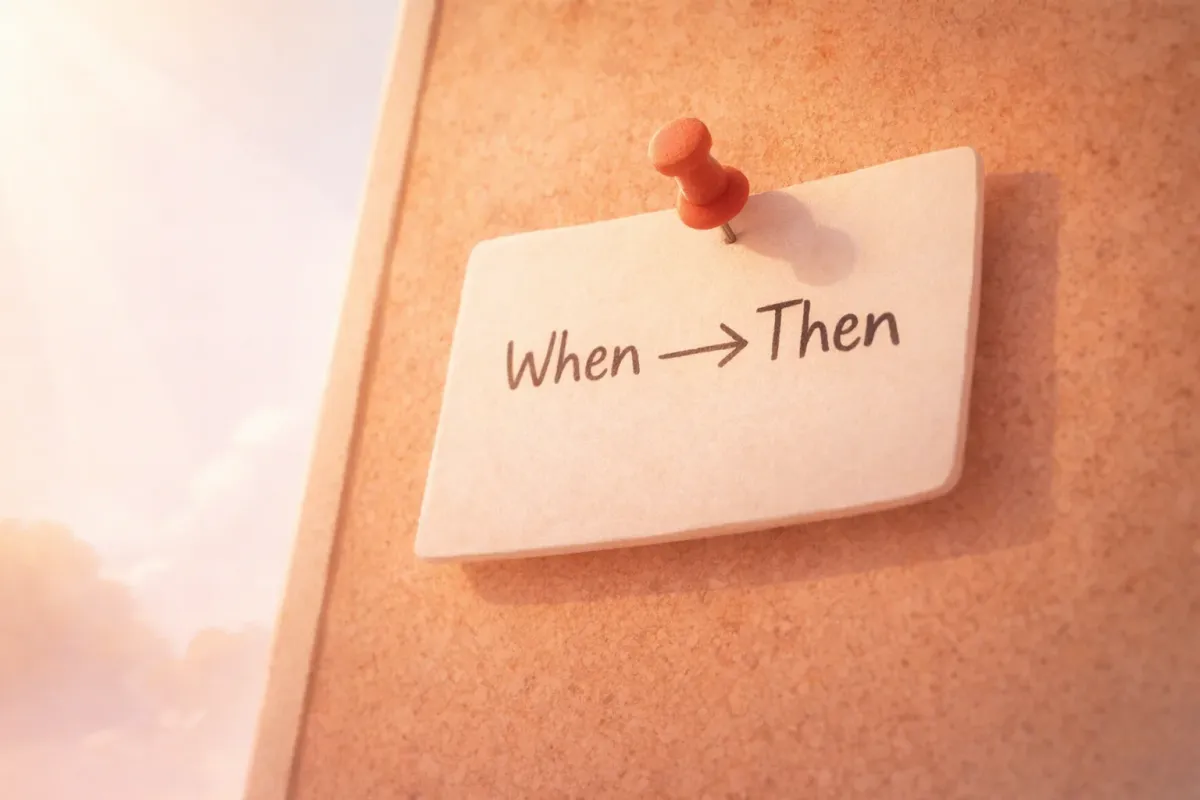
Peter Gollwitzer's research on implementation intentions has been replicated over 200 times with the same result: people who specify when and where they'll act are two to three times more likely to follow through than people who simply intend to act.
The format is absurdly simple: "When [situation], I will [behavior]." Not "I should give more feedback." Instead: "When I finish my Monday standup, I will send one specific piece of recognition." The first is a wish. The second is a plan.
The mechanism: pre-deciding removes the need to deliberate in the moment. Deliberation is where most good intentions die. By linking the behavior to an existing cue, you bypass the part of the brain that negotiates, procrastinates, and rationalizes.
Gollwitzer found this works even for behaviors people actively resist, like confronting difficult conversations or completing tedious administrative tasks.
The hack: Pick one behavior you want your team to adopt. Rewrite it as "When [existing routine], I will [new behavior]." Share it in your next team meeting and ask everyone to write their own. One sentence. That's the whole intervention.